The United States and Uganda have entered a new chapter in their long-standing health partnership with the signing of a groundbreaking five-year, $2.3 billion Bilateral Health Cooperation Memorandum of Understanding. Announced on December 10, 2025 under the America First Global Health Strategy, the agreement sets forth a renewed vision to save lives, strengthen Uganda’s national health system, and enhance global security against infectious disease threats. It also reflects a broader shift in U.S. global health engagement toward co-investment, sustainability, and shared responsibilit
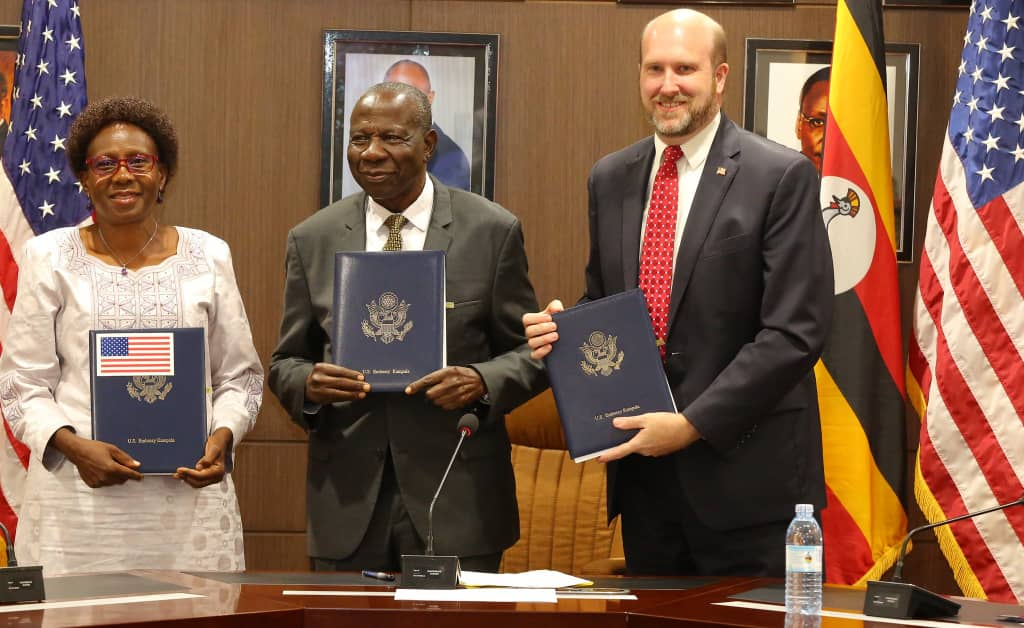
y.
Under the new arrangement, the United States plans to contribute up to $1.7 billion between 2026 and 2030 to support Uganda’s priority health programs, including HIV/AIDS, tuberculosis, malaria, maternal and child health, polio eradication, disease surveillance, emergency preparedness, and workforce development. In turn, the Government of Uganda has committed to increasing its own domestic health spending by more than $500 million over the same period, signaling a significant step toward long-term national ownership and reduced reliance on external financing. The agreement also includes continued support for faith-based health providers, who remain central to Uganda’s service delivery landscape.
Speaking at the signing ceremony, U.S. Ambassador William W. Popp described the MOU as a major step forward for both countries. He emphasized that the partnership not only builds on decades of successful collaboration but also introduces a shift toward stronger community health systems, clearer performance metrics, and an enhanced commitment to data-driven decision-making. According to Ambassador Popp, these elements are essential to preventing future outbreaks from threatening Uganda, the United States, or the global community.
Uganda’s Minister of Finance, Hon. Matia Kasaija, welcomed the agreement as an affirmation of Uganda’s growing responsibility in financing and managing its national health priorities. He noted that the government views this partnership as an opportunity to strengthen institutions, improve workforce capacity, and build a more resilient health system capable of responding to both longstanding and emerging health threats. The Minister credited the United States for sustaining its long-term investment in Uganda’s health sector while encouraging Uganda to progressively assume greater financial responsibility.
The MOU introduces several transformative features designed to support long-term sustainability. Procurement for most health commodities will increasingly transition from U.S. funding to Uganda’s national systems, supporting the growth and professionalization of the national supply chain. Frontline health workers currently funded by the United States will be mapped to appropriate cadres within Uganda’s public service structure, paving the way for their integration into government payroll and ensuring continuity of essential services. Over the next five years, substantial U.S. investment will also be directed toward strengthening Uganda’s digital health and disease surveillance systems, expanding the use of electronic medical records, improving data integration, and modernizing the national data warehouse. These reforms align with Uganda’s broader digitization agenda and will strengthen early detection and response capacity for future health threats. Faith-based health providers will receive additional support to improve service delivery, digitize operations, and expand community health insurance models that increase access and affordability for underserved populations.
For more than sixty years, the United States has been Uganda’s largest global health partner, supporting programs that have saved countless lives and strengthened institutions across the country. This new agreement builds on that legacy while shifting the focus toward shared investment and long-term sustainability. It underscores a joint commitment to protect both Ugandan and American citizens by preventing outbreaks, strengthening health systems, and ensuring that Uganda’s future health agenda is led and sustained by its own national institutions and communities.